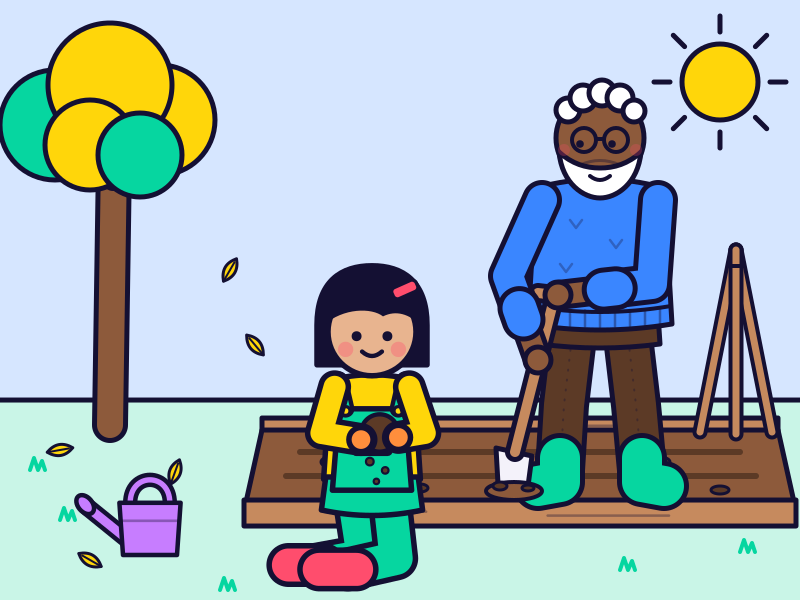
Hana and Grandad Tevita are digging a vegetable patch under the pear tree. Grandad turns the soil with his little spade. Hana breaks up the lumps with her gloves. “Next spring, beans will grow here,” says Grandad.
Hana is digging a vegetable patch with Grandad when a worm wriggles out of the soil. Look at the pictures together: the sunny garden is on top, and the worm’s dark world is underneath.
Hana and Grandad Tevita are digging a vegetable patch under the pear tree. Grandad turns the soil with his little spade. Hana breaks up the lumps with her gloves. “Next spring, beans will grow here,” says Grandad.
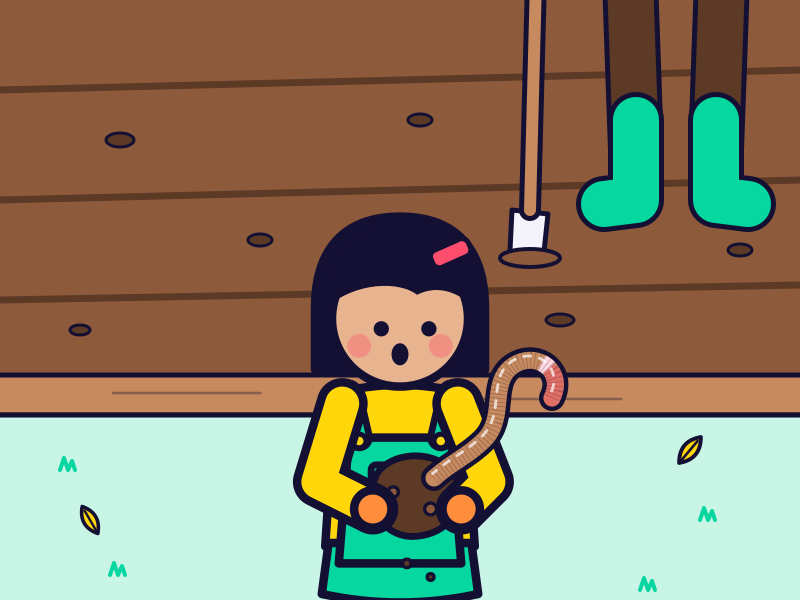
Hana lifts a clump of dark, damp soil. Something pink wriggles out! It is long and soft and shiny. “A worm!” Hana whispers. “Hello, Ribbon.”
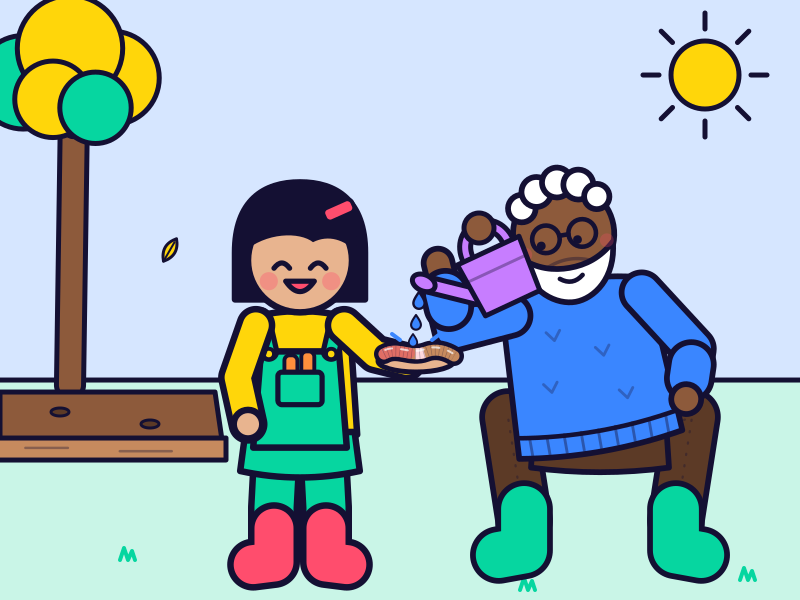
“Can I hold it?” asks Hana. “Gently,” says Grandad. “A worm breathes through its skin, so its skin must stay damp.” Hana pulls off her gloves. Grandad trickles water from the watering can onto her palm. She keeps her hand flat and still, with no squeezing. Ribbon stretches long, then bunches up short. Its body is made of lots of rings. Tiny bristles help it grip, and they tickle!
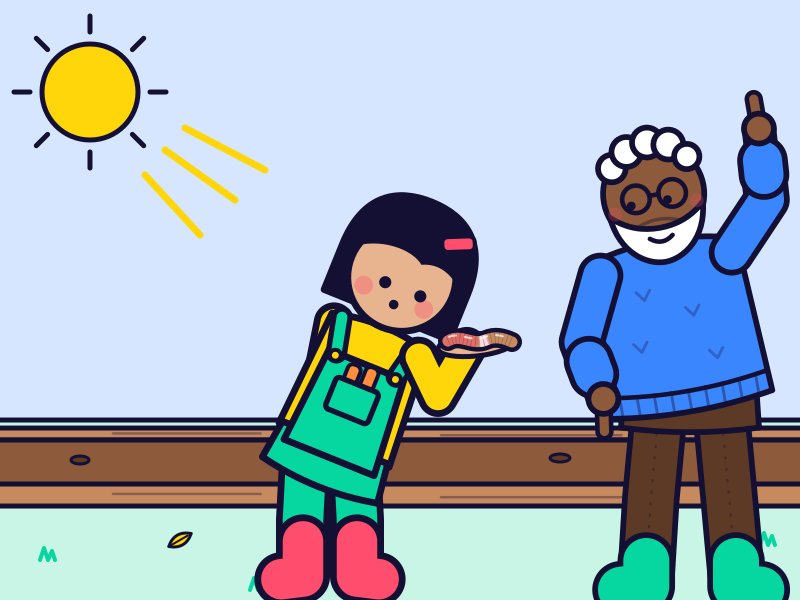
Hana looks closely. “Where are its eyes?” “A worm has no eyes,” says Grandad. “But it can feel light from dark. It likes the cool, dark soil.” Hana feels the warm sun on her neck. “Then Ribbon wants to go home,” she says.
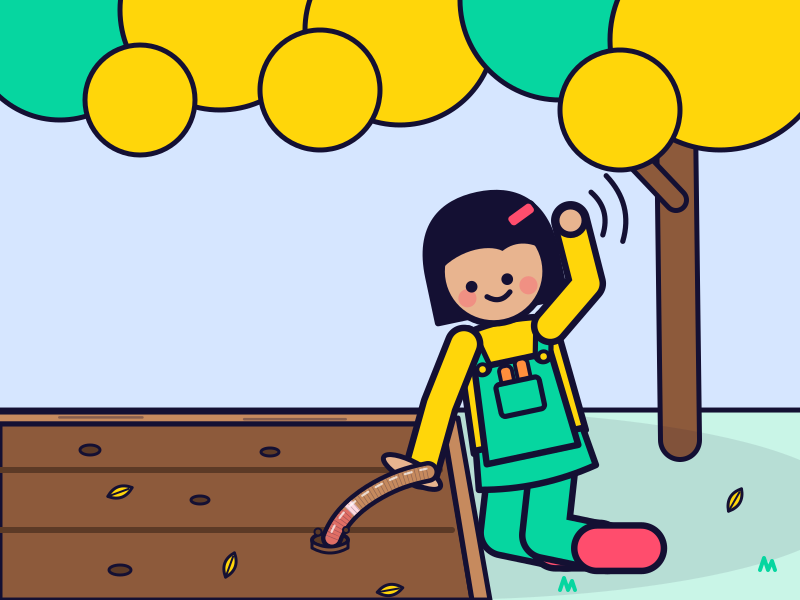
Hana carries Ribbon back to where she found it, in the shade of the pear tree. She lays it softly on the soil. Ribbon pushes its front end into the earth. Slowly, slowly, it slides down until it is gone. “Bye, Ribbon,” says Hana.
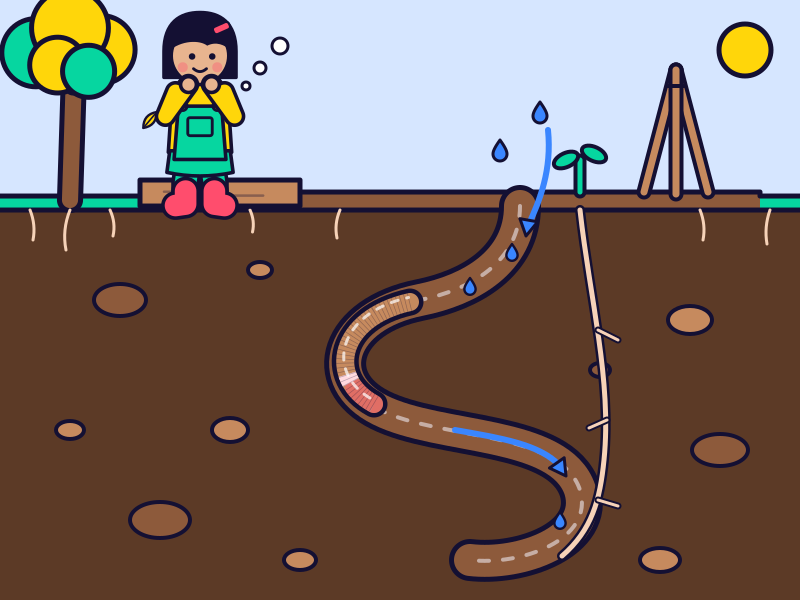
Later, Hana wonders what Ribbon is doing down there. She imagines it pushing through the dark, dark soil, swallowing earth as it goes. Behind it, it leaves a tunnel. The tunnel lets air into the soil. When it rains, the water can soak down the tunnel instead of sitting on top. And roots can grow along it, down and down.
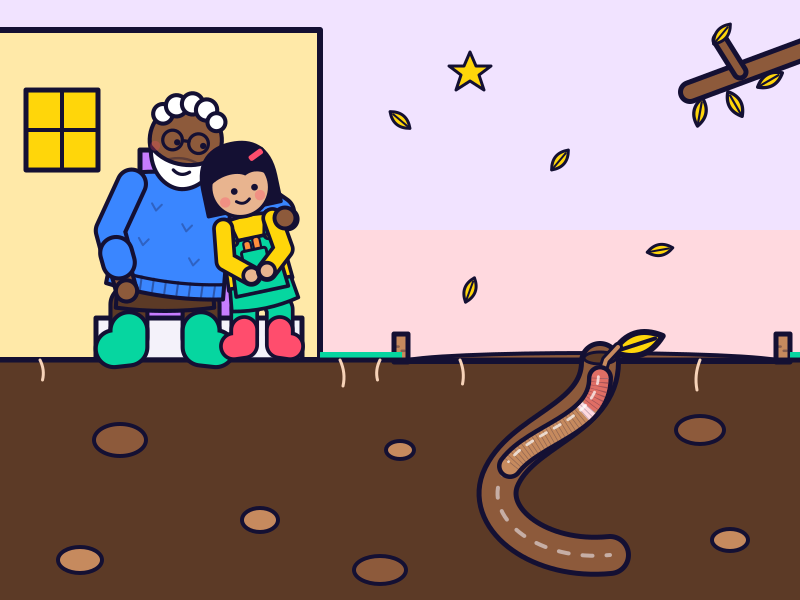
At dusk, Hana and Grandad sit on the back step. Yellow pear leaves drift down onto the patch. “Some worms come up at night,” Grandad says softly. “They pull fallen leaves down into their tunnels to eat.” “Not our beans?” asks Hana. “No. Worms eat old fallen leaves, not growing plants.” Hana pictures Ribbon tugging a leaf down into the cosy dark.
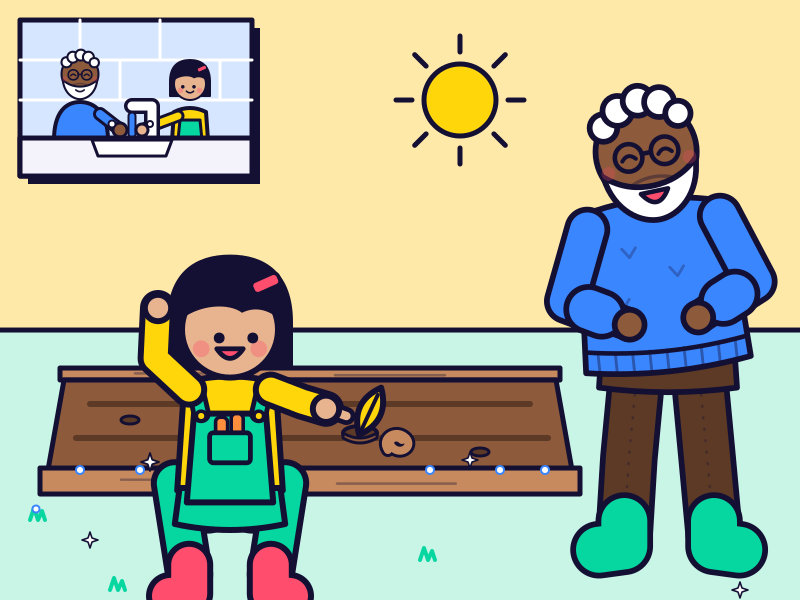
Next morning, the grass sparkles with dew. Hana runs to the patch in her red boots. A yellow leaf is poking half out of a tiny hole! Beside it sits a little curly heap of soil. “Worm poo,” laughs Grandad. “It is full of plant food, so it will help our beans grow.” Hana smiles. “Thank you, Ribbon,” she whispers. Then she and Grandad go inside to wash their hands.
the end
What this story helps with: Earthworms dig tunnels that let air and water into the soil, and they eat fallen leaves and old plant bits, which helps plants grow. We handle worms gently and put them back.
This story practises noticing and caring for small creatures, and shows how earthworms help the soil: their tunnels let air and water in, they eat fallen leaves and old plant bits, and their casts are full of plant food. Next time you are outside together, look for worm casts or a leaf pulled into a little hole, and ask your child what they think the worm was doing. If your child holds a worm, help them wet their hands first and put it back quickly where they found it, then wash hands.
Written and illustrated by the wishyou.today team. Every story is checked for age, kindness, safety and facts before it is published. Spotted something? Tell us on Instagram.
A breezy picture story for 1–2 year olds: Tomi blows a dandelion clock and watches one seed float on its tiny parachute to a new home.
A playful picture story for 5 year olds about Hettie the honey bee, who dances a map for her sisters, and Leila, who dances one too.
A curious picture story for 5 year olds about why the sky is blue and sunsets glow orange, with a tiny sky made in a glass of milky water.