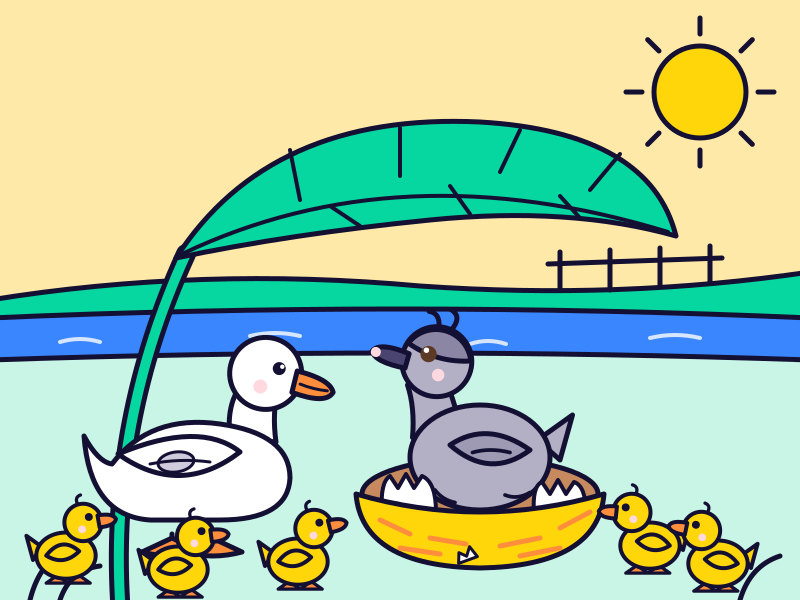
Mother Duck sat on her eggs under a big green leaf. One egg was extra big.
Crack! Out came five yellow ducklings. Then came a big grey duckling with a long neck.
“Hello, Little Grey,” said Mother Duck. “I love you.”
A soft, bedtime retelling of Hans Christian Andersen’s duckling tale from 1843. Nobody is unkind here: the other animals are only puzzled, and Mother Duck loves him all along.
Mother Duck sat on her eggs under a big green leaf. One egg was extra big.
Crack! Out came five yellow ducklings. Then came a big grey duckling with a long neck.
“Hello, Little Grey,” said Mother Duck. “I love you.”
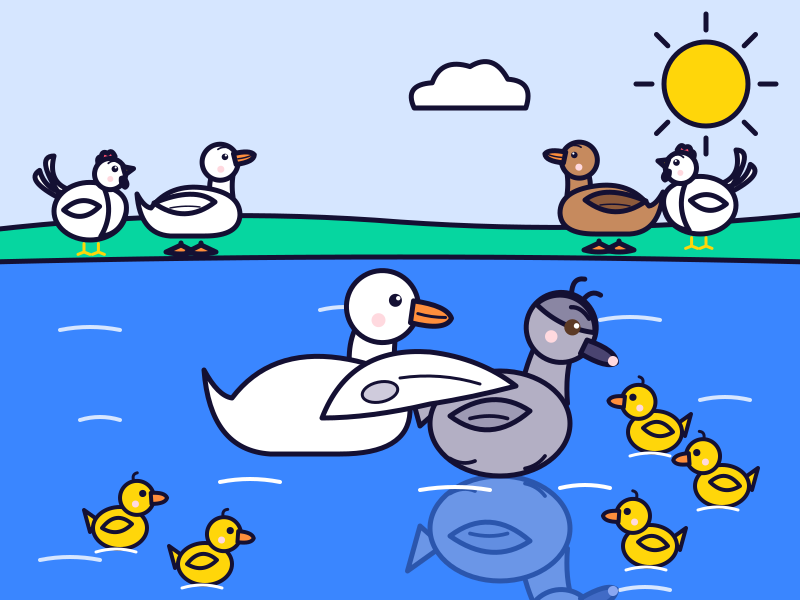
Splash! Little Grey swam so well. “Look at him go!” said Mother Duck.
The farm birds stared. “Who is that? So big and grey!”
Little Grey looked into the water. A big grey bird looked back. He felt like the odd one out. Mother Duck snuggled him close.
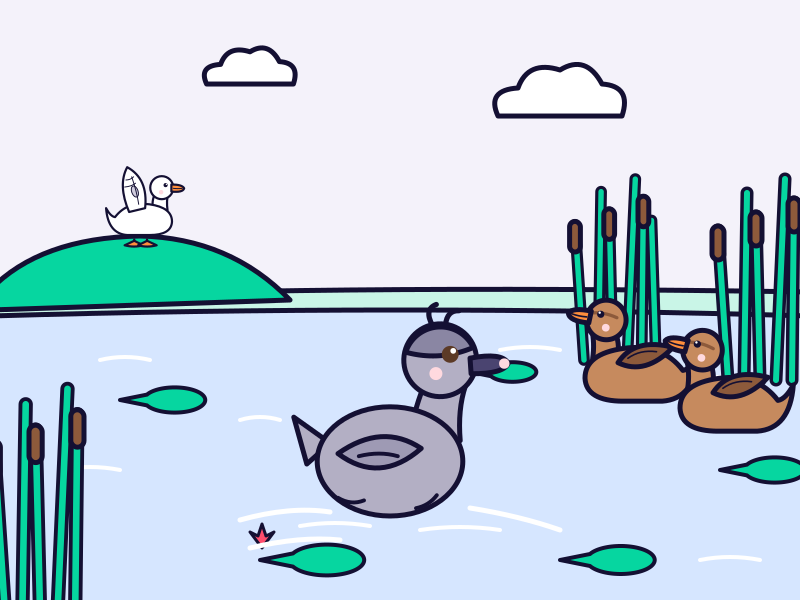
“I want to see the wide world,” said Little Grey. “I want to find where I fit.”
Mother Duck hugged him. “Come home any time.” She waved and waved.
On the marsh, the wild ducks just shrugged. Little Grey paddled on.
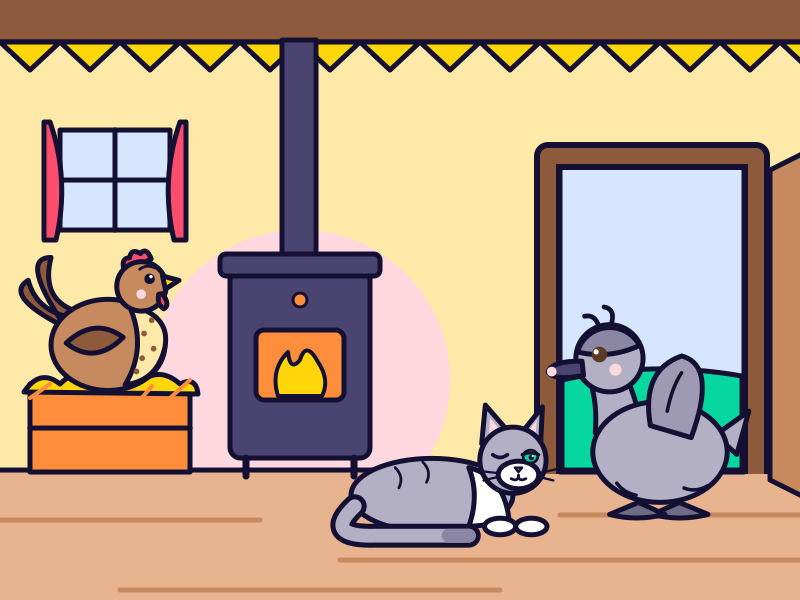
Little Grey found a cottage with a hen and a cat.
“Can you lay eggs?” asked Hen. “Can you purr?” asked Cat. “No,” said Little Grey. “But I can swim!”
They blinked, puzzled. So he said a polite goodbye.
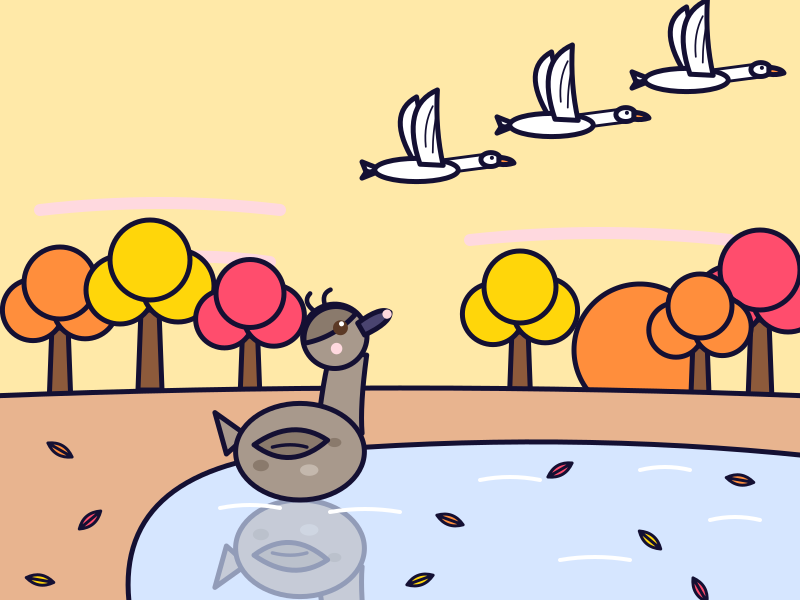
Autumn came, gold and red.
One evening, big white birds flew over. “Oh, how lovely,” whispered Little Grey.
He looked into the water. A grey-brown bird looked back. He wondered and wondered.
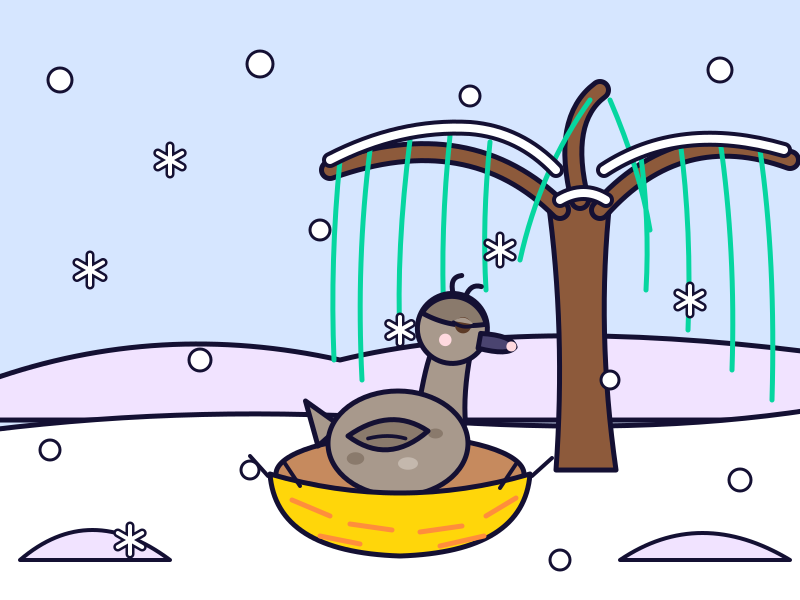
Winter came, soft and white. Little Grey made a snug nest of dry reeds under a willow.
He watched the snow fall. All winter he rested, safe and warm, and grew.
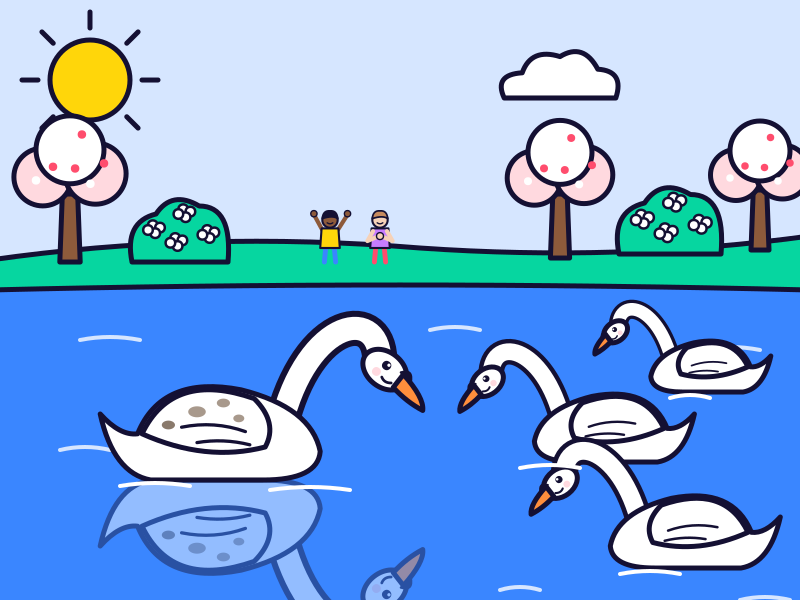
Spring came, with blossom. On a calm lake, three white swans glided by.
Shyly, Little Grey swam closer. He looked into the water. A white swan looked back! He had been a swan all along.
“Hello,” said the swans, bowing. “Come and swim with us.” Children on the bank waved and clapped.
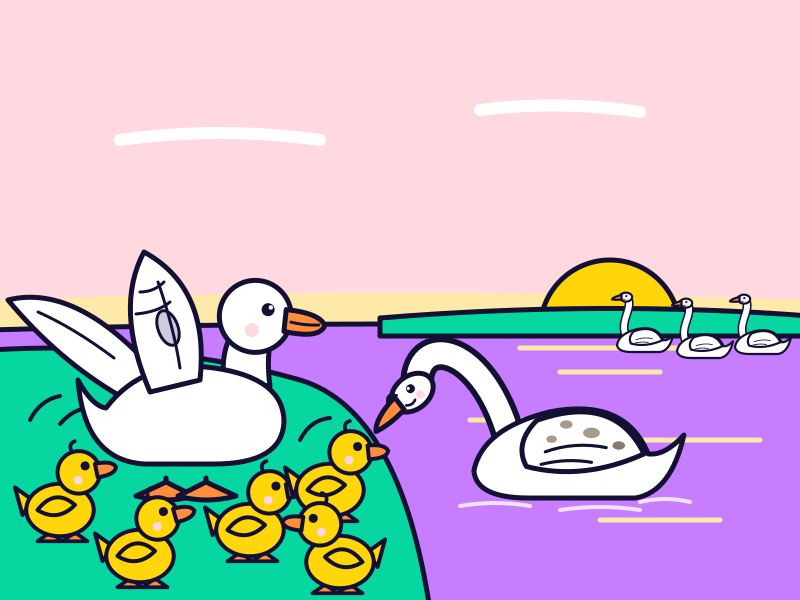
One golden evening, Little Grey glided home to the farm.
Mother Duck opened her wings wide. “My Little Grey! I loved you all along, just as you are,” she said.
The sun went down, warm and pink. Little Grey had two families now. He tucked in his head and slept.
the end
What this story helps with: Everyone belongs somewhere, and being different is fine: you can be loved and be yourself while you grow into who you are.
This story practises belonging and kindness to someone who looks different. In Andersen’s tale the farm birds peck and kick the duckling and he nearly freezes in the ice; here the animals are only puzzled, Mother Duck loves him throughout, and winter is a safe, snug rest, so the story is about finding where you fit, not about being rejected. A real fact behind it: young mute swans (cygnets) are grey or grey-brown, and their white grown-up feathers come in gradually over about their first year. The swans flying over in autumn is part of the tale; real mute swans mostly stay near home. Try asking: how would you welcome someone new who feels like the odd one out?
Retold from: The Ugly Duckling (Den grimme ælling), Hans Christian Andersen; English translation by Mrs H. B. Paull (Susanna Mary Paull), Hans Andersen’s Fairy Tales, Frederick Warne, 1888 (1843). The tale is in the public domain; our words and pictures are new, and gentler for little ones. This is an independent retelling, not affiliated with or endorsed by any publisher, studio or trade mark owner connected with the tale or its later versions.
Written and illustrated by the wishyou.today team. Every story is checked for age, kindness, safety and facts before it is published. Spotted something? Tell us on Instagram.
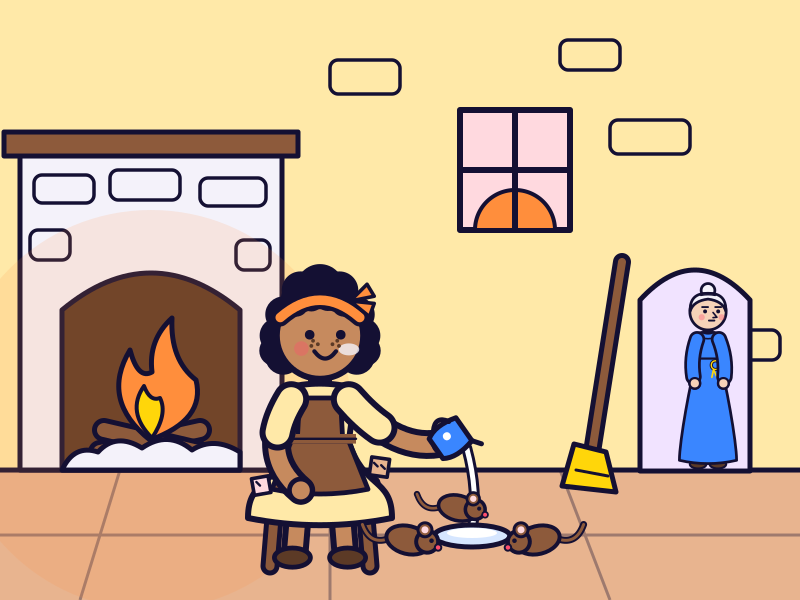
A gentle retelling of Perrault’s Cinderella for 3–4 year olds: a kind girl, a pumpkin coach, a glass slipper and a big forgiving hug.
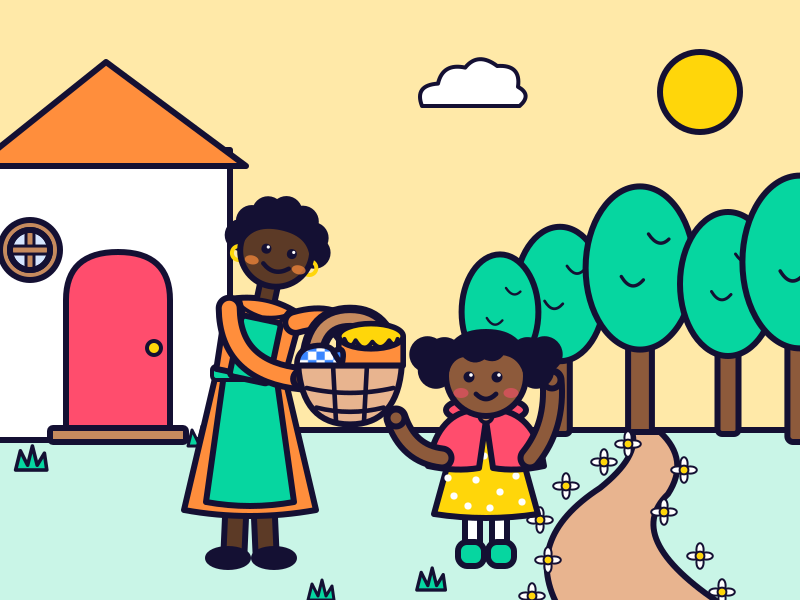
A gentle retelling of Little Red Riding Hood for 3–4 year olds: Grandma hides in her wardrobe and a silly wolf only wants the cake.
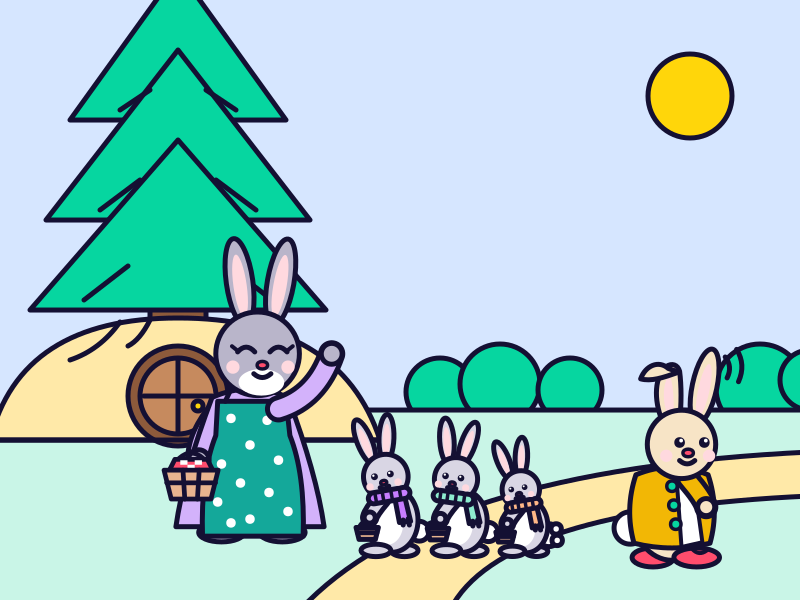
A gentle, funny retelling of Beatrix Potter’s 1902 tale for 3–4 year olds: Peter slips into Mr McGregor’s garden, then finds his way home.